
What to do after an EDI onboarding project ends
Jun 09, 2026

Effective onboarding establishes a new workflow, while consistent aftercare maintains it. Without a structured follow-up process, suppliers often continue to send invoices by email and handle orders outside of EDI. Internal teams frequently revert to old habits, creating parallel processes that reduce the financial return on the onboarding project.
To keep the house in order, companies need clear aftercare activities.
1. Align the internal team and assign ownership
Maintaining discipline in EDI onboarding requires total internal alignment. When procurement or finance teams continue to use side channels, external partners quickly notice that EDI is not the standard.
Long-term success depends on clear ownership. The internal team must know:
- the exact document requirements which are expected via EDI;
- procedures for handling manual documents, such as PDFs or Word files;
- and who to contact in case of exceptions.
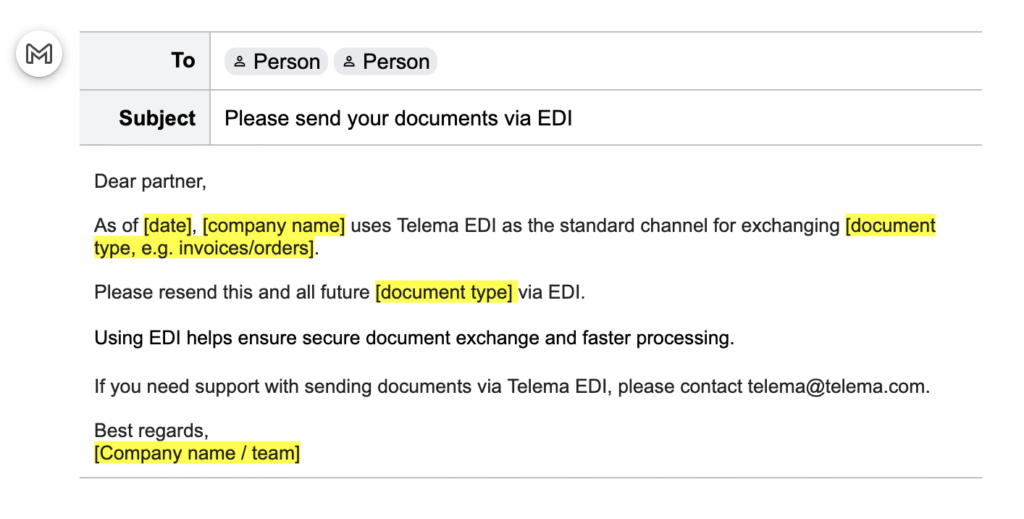
2. Reject non-EDI documents after the deadline
Once the transition deadline passes, documents sent in a non-EDI format should not be accepted. Instead, send a standardised notification reminding the partner of the agreed-upon document exchange method. A template to communicate this is available here: link
3. Include EDI requirements in business agreements
To maintain onboarding results, make EDI a formal, standard requirement in all legal agreements and business contracts. Building EDI into the process from day one is far more efficient than attempting to alter established habits later.
The agreements can include points such as:
- Information Exchange: The parties must use Telema EDI services to exchange all commercial data and documents.
- Mandatory Document Types: Standardised EDI documents that are exchanged between Buyer and Vendor include ORDER (ORDRSP, DESADV, RECADV) and INVOICE.
It is especially important to establish automation as a baseline condition of doing business with new partners. When you include EDI in initial contract discussions, onboarding becomes a part of standard supplier management.
4. Define a process for exceptions
Occasional exceptions are inevitable. A new partner may need a short grace period, or a special situation may require temporary manual handling.
Unmanaged exceptions create an operational problem.
A good aftercare process defines:
- who can approve a temporary workaround;
- which cases qualify for an exception;
- when the temporary approval expires;
- and how to move the partner back to the standard EDI process.
Setting these rules keeps temporary exceptions from becoming permanent.
Key takeaway
The return on an onboarding investment depends on what happens after.
Accepting non-EDI documents, failing to align internal teams or not including the agreed process in business contracts heightens the risk of a return to the original inefficiencies the onboarding project was meant to solve. Aftercare matters.
Interested in EDI onboarding?
A structured onboarding approach helps you achieve higher supplier coverage and long-term consistency. Telema supports supplier communication, coordination and structured follow-up as part of its onboarding service.
For onboarding support, contact:
Marianne Kobin
marianne.kobin@telema.com