
An invitation is not enough: EDI needs a clear onboarding strategy
May 07, 2026

When companies want to increase EDI adoption, technology is usually not the biggest barrier. The real challenge is onboarding your trade partners to EDI. In practice, there are two main strategies for onboarding: opt-in and opt-out.
According to the global e-invoicing and tax compliance report Billentis, opt-in strategies typically lead to significantly lower adoption, while opt-out models can reach adoption levels of around 85–90% within the same timeframe.
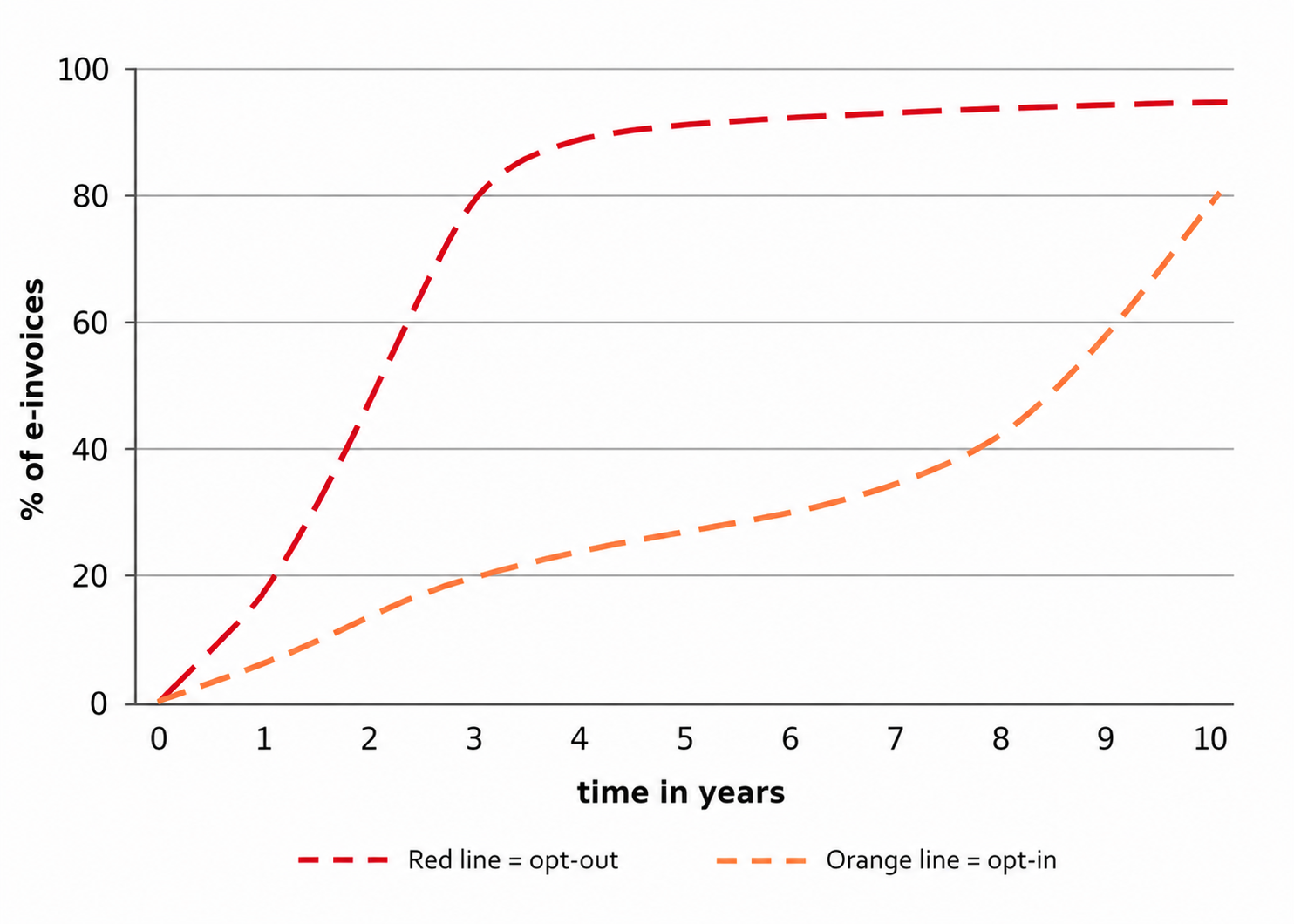
Opt-in onboarding: the invitation
In an opt-in model, partners are invited to join. Each partner needs to be convinced, informed and encouraged to start using EDI. You explain the benefits, outline the onboarding steps, and rely on the partner to start the process when they are ready. Sometimes an incentive is offered- a lottery of ticket, shorter payment terms or similar.
This approach works well for pilots or smaller partner groups, as it allows partners to engage at a pace that fits their priorities. However, with the timing in the partner’s hands, the process often slows down. Many partners may agree in principle, but never take action in practice.
Opt-in can also extend the period during which companies need to maintain parallel processes, such as email, PDF exchange or manual document handling.
Opt-out onboarding: the expectation
Opt-out onboarding replaces open-ended invitations with a clear onboarding strategy and structured expectations.
In this model, EDI is introduced as the new standard way of working from a defined date. Partners are informed about a specific transition deadline, requirements and next steps, often also including penalties for non-compliance. Partners can still raise justified exceptions or request additional preparation time, but the overall direction is clear: the transition is happening.
This approach helps create priority inside partner organisations, where integration projects often compete with other internal initiatives. Instead of asking partners whether they want to join, the conversation shifts to how and when they will make the transition.
Why opt-out onboarding is the stronger strategy
The main advantage of opt-out onboarding is clarity. With opt-in, EDI feels optional. With opt-out, the decision is already made, and the focus shifts to implementation.
That shift creates urgency and accountability. It also reflects global best practice in large-scale EDI rollouts, where the best results are achieved when companies actively lead the transition with explicit deadlines, structured communication, and consistent follow-up.
How to make opt-out work well
Opt-out onboarding works best when it is unambiguous, fair and supported. A strong strategy should include:
- a direct, realistic transition deadline: “From 01.06.2026, we will only accept invoices in machine-readable format via EDI through Telema.”
- a plausible reason for the change: “We aim to make goods receiving processes more efficient.”
- clear partner benefits: “EDI enables fast and secure data transfer from one ERP to another. E-documents, ensure information quality and reduce the need for manual data entry.”
- simple onboarding instructions: “As next steps, please create your connection in the Telema portal.”
- early and repeated communication
- support for technical questions
- consistent follow-up and reminders before the deadline
- a systematic exception-handling process
- processing fees for manual work, where relevant
- EDI requirements included in supply agreements
The best rollouts are not aggressive. They are clear, well-organised, and proactively supportive. That is why opt-out onboarding has become the reasonable choice for companies that want faster, broader and more predictable EDI adoption.
Structured communication improves results. Proven onboarding email templates for suppliers and buyers help make the message consistent, practical and easier to act on.
Ready to improve your onboarding strategy?
If your company wants to maximise EDI adoption with your partners, Telema can help you plan the right onboarding model, segment partners, and manage the rollout with organised communication and follow-up.
Request onboarding consultation: